This is an asynchronous interactive workshop version of the talk at ICTCM 2021 in March.
The two downloads below are for the second part of the talk — an introduction to a new project called Grassroots Histories and the Arts and Sciences.
Download this zipped file . It contains an interactive web page. After you’ve downloaded the zipped file, unzip it. On Windows computers, right click and choose extract. MacOS should unzip automatically. Open the unzipped folder scramble. Open the scramble.html file in your favorite Javascript-enabled browser. We’ll work with it at ICTCM. It is a “jigsaw puzzle.” You and and your students can make your own jigsaw puzzle by using your own source.jpg file. The width and height of your file must both be evenly divisible by eight.
Download this zipped file. It contains an interactive web page. After you’ve downloaded the zipped file, unzip it. On Windows computers, right click and choose extract. MacOS should unzip automatically. Open the unzipped folder guided-tour. You can read the creativity.pdf file. Open the html file in your favorite Javascript-enabled browser. We’ll work with it at ICTCM. You and your students can make guided tours of your own photographs by using your own source.jpg file, the higher the resolution the better.
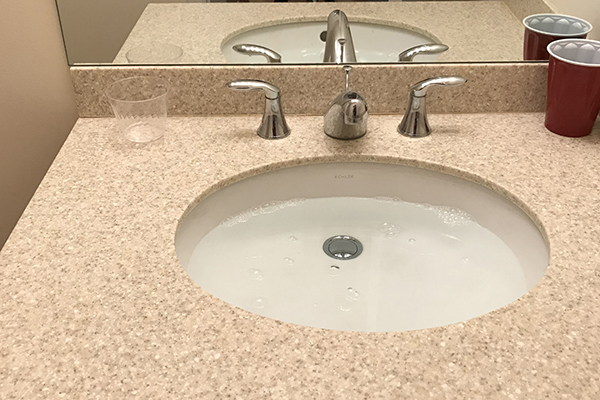
Your house and your students’ houses are great places to learn mathematics and use it to understand and discover some surprising and powerful optical phenomena. They are well-equipped optical laboratories. For example, you can experiment with refraction in any washbasin. Use your mouse to drag the vertical bar back-and-forth in the figure below to see how refraction changes the apparent position of the drain in the bottom of the washbasin.

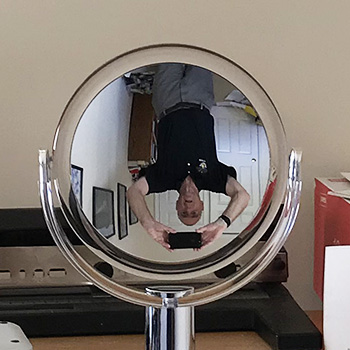
The two pictures below show my reflection in the same make-up mirror. Notice how my reflection is inverted when I’m far away from the mirror on the left but not inverted when I’m up close to the mirror on the right.

In this talk we discuss classroom-ready units based on the first version of Fermat’s Principle – anthropomorphic light rays travel from one point to another along the fastest possible route. The geometric optics involved uses careful graphs and linear functions along with the ability to find minimums or maximums of functions. These are wonderful applications of optimization in Calculus but we can avoid Calculus and use graphing calculators or computer software to optimize functions in high school or college algebra courses. Because we can do so much at home, these units can be particularly useful when physical distancing is important. They also establish that mathematics is everywhere.
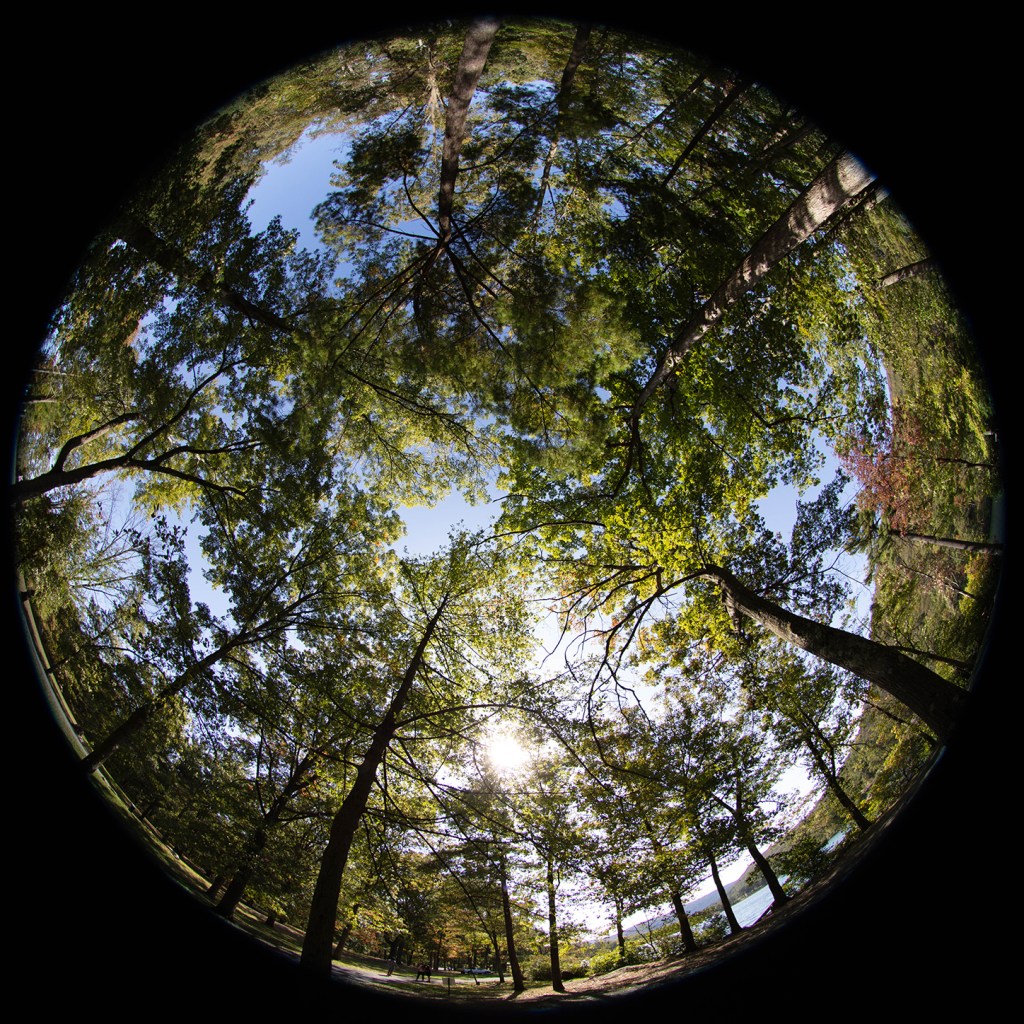
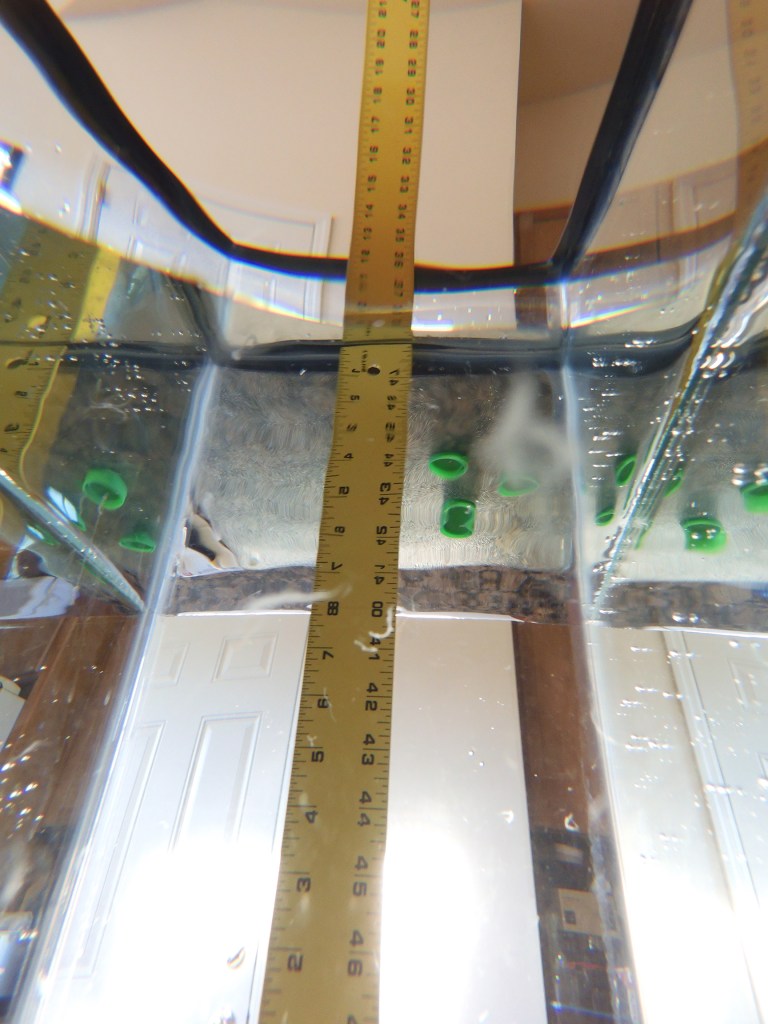
The narrative told by these units is full of discovery, surprises and useful applications – from spearfishing to the wonders of three-dimensional and spherical photography. We will exploit the optical power that most of us carry everywhere in our smartphones. Our students will discover the surprising predictions made by mathematical analysis. For example, as they do a series of seemingly routine, even repetitive problems, they will discover that a fish looking at a fisherman up to his waist in water will see the fisherman’s severed upper body floating high above the water. They will learn how to verify such predictions with simple experiments like the one conducted on my kitchen counter shown below.

Using a smartphone with an inexpensive underwater housing we can take a photograph from the bottom at one end of an aquarium looking at a yardstick at the other end. If you look carefully at the photograph below you will notice that from this fish’s view the yardstick is severed. You will also note the reflection of the yardstick between its severed upper portion and its underwater portion. Some of your students may have already known about this phenomenon from fly-fishing.
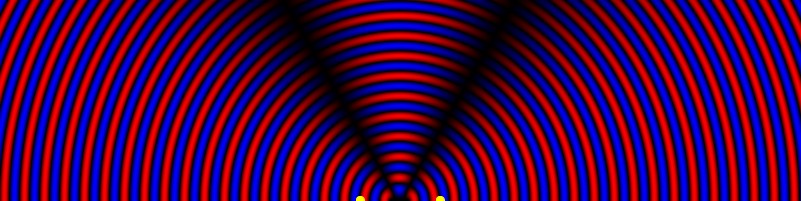
This plot line from mathematical discovery, through surprise, and then experimental confirmation – this interplay between theory and the real world is repeated in each unit and as a series. After a series of successes using geometric optics, we are confronted with the failure of geometric optics to explain phenomena that are seen using cheap laser pointers and cheap diffraction grating glasses. You can buy laser pointers for about $6.00 each as cat-toys. This is a great setting in which to study the sine function.
This series of units can be used in a game-like approach to learning. Students embark on a series of quests and prior to each quest they must build up their character’ skills by mastering topics in their usual courses.
 Just Add Math