Just Add Math

There are many wonderful resources on the Internet designed for instant gratification. They often avoid mathematics, science and the arts – focusing on the immediate “WOW!” factor. These resources are like dehydrated food – of limited use without adding water. This site adds math, science, and the arts. Math, science and the arts give you creative power. Whether you want to go to the Moon or Mars, to feed the hungry, to provide clean safe water to the thirsty, to tell your story, or to shape the course of history, this site is for you.
We use words, we use pictures, and we use sounds for many things — to tell stories, to record and exchange ideas, and to think. Most of us carry smartphones with microphones to record sounds and cameras to make pictures and with libraries of music and albums of photographs. Simply carrying a camera and taking pictures leads us look for and see things in new ways.
For example, I took the photograph below on a walk near my home that I have done literally hundreds of times in the months since COVID-19 hit. Without a camera I would have simply ducked under this overhanging branch. With a camera I saw beautiful backlit curves. My camera has kept me sane.


One of the things I miss is traveling to the City. I wanted to tell the story of my last trip before we were told to avoid non-essential travel. I wanted a picture that represented both the City and the unseen threat of SARS- CoV-2. I had a color picture of the Brooklyn Bridge that I took on my last trip into the City, on February 28, 2020, but I wanted a black-and-white photograph to convey that unseen threat. Math and science – computer science – to the rescue. With a bit of computer programming I was able to convert my color photograph to black-and-white. You can do things like this and much, much more with math and programming. In this site we will use the computer language Processing but you can use almost any language.
We will do some programming ourselves and we will also use inexpensive software. For example, if you have an iPhone or Android-based phone you can use inexpensive ($2.49 or $2.99) software to make your own three-dimensional photographs. Most people use special glasses to view three-dimensional photographs. For example, the photograph below is called an anaglyph and can be viewed using the cardboard red/blue or red/cyan glasses that are often packaged in 3D books. If you happen to have a pair use them view the picture below.
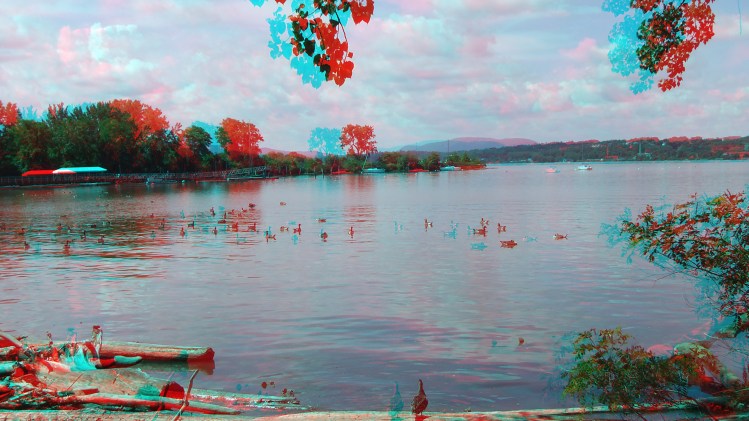
We “see” three dimensions using binocular vision. If we are asked what parts of our bodies are responsible for vision, most of us would answer – “our eyes.” But, our brains play a huge role. When you look at a three dimensional scene or a three dimensional picture, each of your eyes sees a slightly different image and your brain builds a three dimensional model. This is also a great metaphor. Our brains filter and enhance the words we hear, the images we see, the odors we smell and everything we sense. The models our brains build and the emotions we feel are based on what we sense and everything that has gone before. Just smelling gingerbread brings me many happy memories.
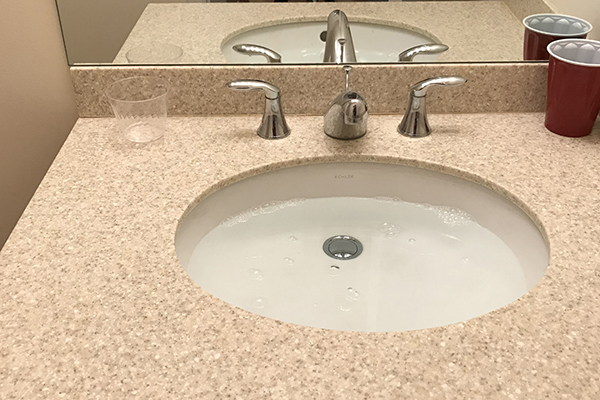
We often use mirrors and lenses when we make photographs. The scientific principle behind mirrors is called reflection and the scientific principle behind lenses is called refraction. You have a complete optics lab in your house. You can use your washbasin, for example, to study refraction. Compare the two photographs below, one with the washbasin empty and one with it full, by sliding the vertical divider back-and-forth Notice how filling the washbasin with water makes the drain appear higher than it really is.

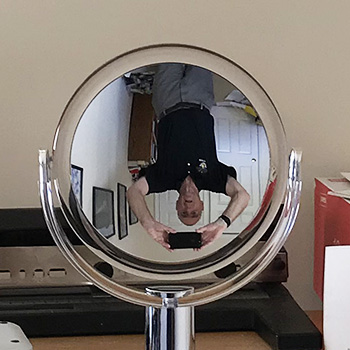
… and you can investigate reflection using make-up mirrors like the one above.
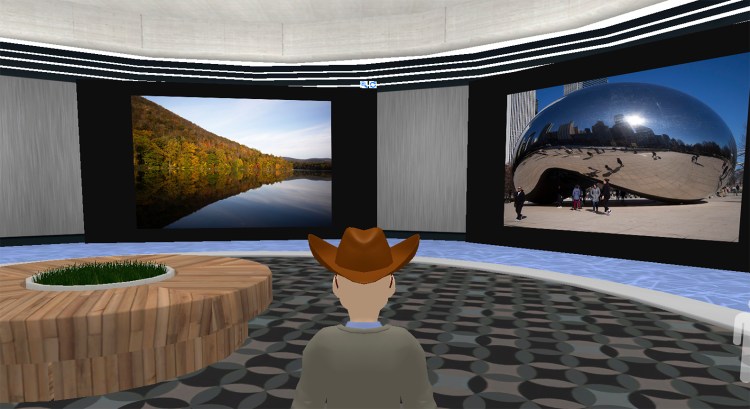
Through the power of the Internet, you will mount your own shows in your own art gallery.
In addition to choosing images and arranging them on the walls, you will write gallery notes. You may even choose music for your gallery.
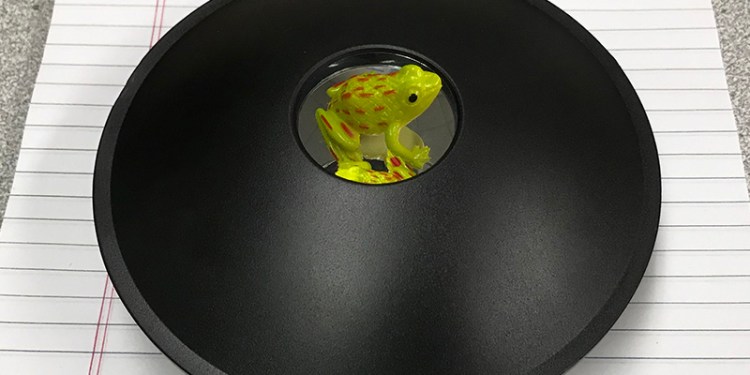
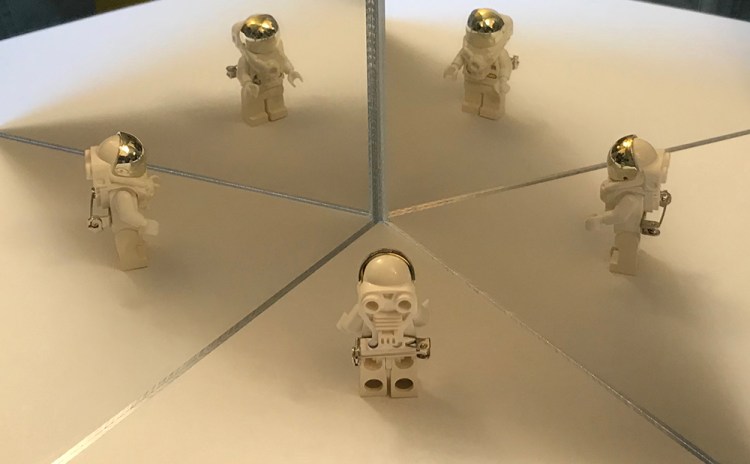
We will study reflection, refraction, color, binocular (three-dimensional) vision and Optics in the Park, a pop-up museum.
The Collaborative Computing Group
If you have seen the movie Hidden Figures you have seen the power of collaborative computing. Solving real and important problems often requires far more calculating or computing than any one person can do. Groups of people working together can solve these problems. They all have a general idea of the big problem and each group works on one part of the problem.
 Just Add Math