Living the Life of a Mathematician in the Technology (21st) Century
Contact: Frank.Wattenberg@mac.com
These pages accompany a minicourse to be given at ICTCM 2023 on Saturday, March 18, 2023 in Denver Colorado.
Description
Over the next few years we will make decisions, personally and as a society, that will shape our futures. Many of these decisions will involve how we use recent scientific advances in robotics, artificial intelligence, machine learning, quantum technologies, quantum computing and quantum algorithms. These same advances give us new powers to understand our world and to make better choices. We all, from professional mathematicians to voters, need to live our lives as everyday, everywhere mathematicians and artists, bringing all our scientific and expressive powers to bear to make better decisions. Our record is not good. Our response to the SARS-CoV-2 virus and the COVID-19 pandemic it caused was badly hampered by widespread misunderstanding about science and the life of a scientist. As mathematics educators and especially as teachers of high enrollment mathematics classes we have a particular responsibility in developing a citizenry that is better prepared.
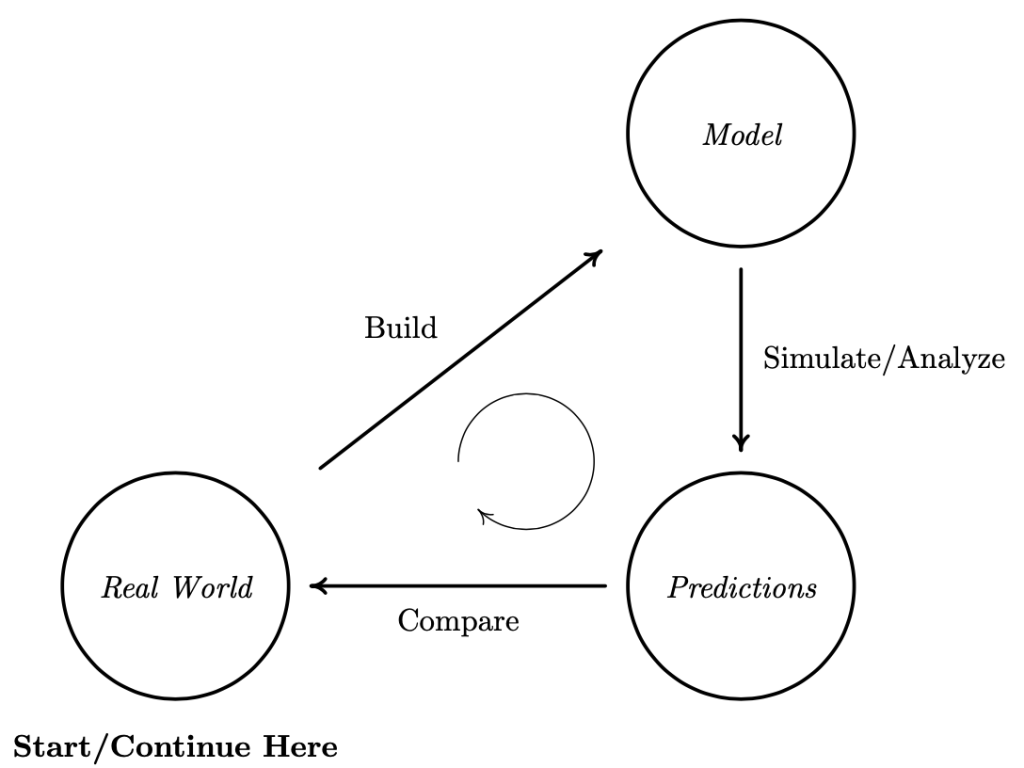
Figure 1: The Modeling Cycle or Scientific Method
Today we will live the life of a scientist/mathematician in a “participatory, improvisational play” with many short short scenes, each following one cycle through the modeling cycle or scientific method shown in Figure 1. You will play the roles of your students. Each scene has the same structure, a structure that lends itself to the classroom: we begin with observations in the real world, then we develop a model or a theory to help us understand what we’ve observed, then we analyze that model to see its implications and predictions; finally we compare these predictions with the real world setting us up for future trips around the modeling cycle, producing better and more useful models. We will use cheap “equipment” – things found around the house or readily available (some swag) for experimentation and observation. By the end of our workshop we will be using this approach to inform high stakes, often controversial, decision-making as shown in Figure 2 – for example, decisions about how to use the capabilities of technologies like ChatGPT and future even more powerful capabilities driven by quantum computing.
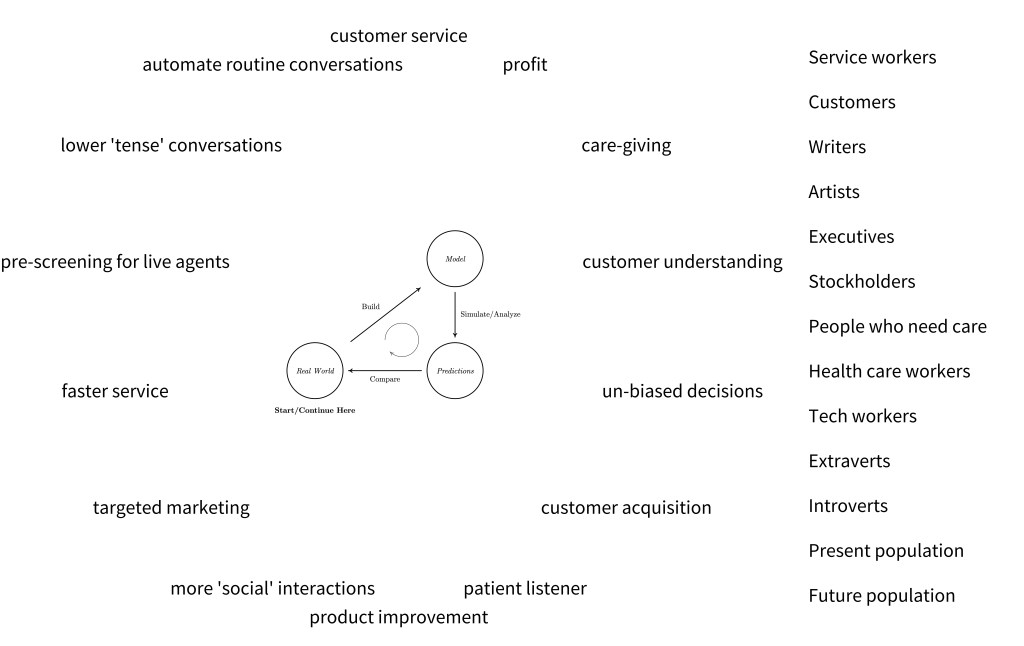
Figure 2: The life of a mathematician in high stakes times – many goals & stakeholders
Our “participatory, improvisational play” has two acts. In the first act we concentrate on Figure 1 with the long term goal of understanding the science underlying quantum technologies, quantum computing and quantum algorithms. Because the underlying quantum science is so counterintuitive we won’t reach this goal. We will, however, build a solid foundation based on simply-observed phenomena involving light and optics. In the second act we focus on the life and role of a mathematician/scientist/artist in high stakes decision-making as shown in Figure 2. Along the way we’ll be using many different kinds of technology. Please bring a bag for swag, your mobile devices or laptops and be prepared to use whatever technology you and your students use for computation and graphics.
Click here for Act I and here for Act II
Cheap and Readily Available Equipment and Some Swag
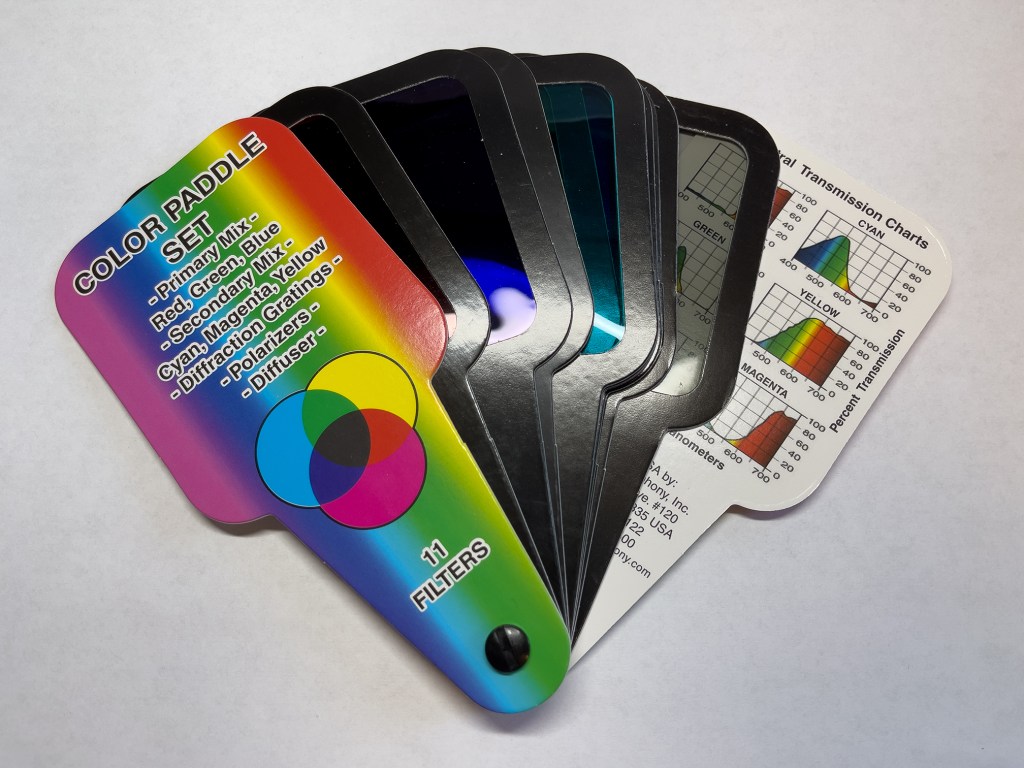
We (and your students?) will be doing many experiments with light. Your swag includes some of the items discussed below but we really like the Color Paddle Set that is sold by rainbowsymphony.com and is also available from Amazon.com. It includes six colored gels, two linear polarizing filters and two diffraction gratings all mounted in sturdy cardboard. We’ve bought these for under $12.00 but the price now seems to be $20.00. We particularly like the spectral transmission charts that make the connection between the RGB model we use here with the gels and the light spectrum.
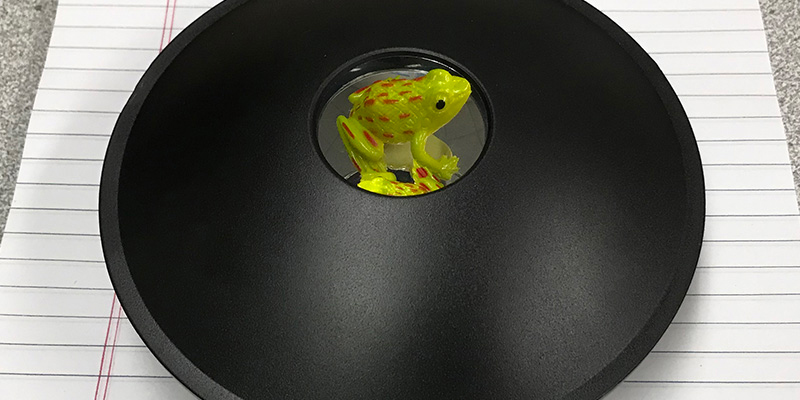
The Mirascope
- The Mirascope (SWAG) but we have a limited number. Be sure to come early. These really catch students’ attention and are a great introduction to geometric optics and the properties of parabolas. They are available from Amazon.com and others. The price varies a lot. We’ve bought them on super sales for under $5.00. Currently they are available for $7.98.
- Six colored gels (or filters) — red, green, blue, cyan, magenta and yellow. (SWAG)
- Three linear polarizing filters (SWAG). We also recommend using Polaroid sunglasses and the linear polarizing filters that are mounted in cardboard slide mounts and sold by rainbowsymphony.com ($40.00 for a pack of 100)
- One pair of diffraction glasses (SWAG). We also recommend the diffraction glasses sold by rainbow symphony.com ($35.00 for a pack of 100) or the diffraction slides sold in three variations by the same company ($35.00 for a pack of 100).
- We will use the red and cyan colored gels (filters) to view anaglyph 3D images but you can use the 3D glasses that come with many 3D books or buy a pack of 100 from rainbow symphony for $36.00. These make great holiday presents.
- We have a few laser pointers for SWAG. Many of you already have one. The cheapest way to buy laser pointers is in sets of three “cat toys” for about $10.00 per set. They are available through Amazon.com and elsewhere.
- Your and your students’ smartphones are wonderful tools. We will use the flashlight app as a “point source” for experiments with geometric optics but smartphones have huge potential. Their cameras are particularly powerful and flexible.
 Just Add Math