ICTCM21 Reimagined June 11, 2021
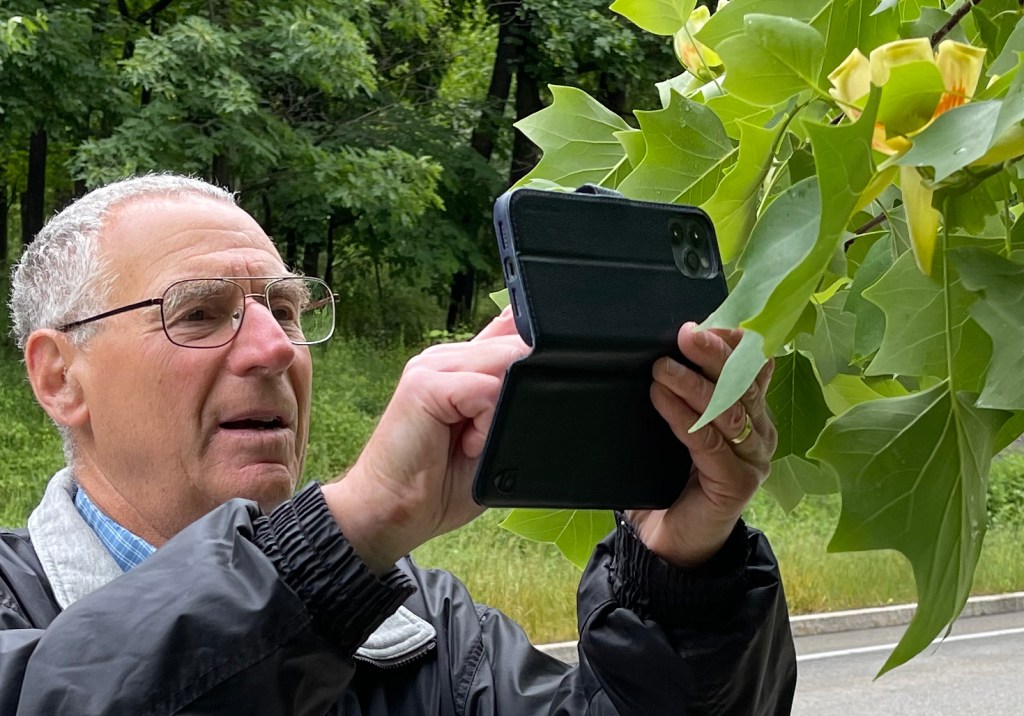
The image above is a single sentence that reads from left to right with a subject, “I”, a verb “photograph” and an object “flower.” It has context – I’m on a street on gray day – and is rich with details – I’m using a cellphone camera.
During the height of the pandemic I missed several long-planned adventures and this image shows how cellphone photography improved my life. Because I was forced to spend more time than usual walking around my own neighborhood and because I always had a camera with me I noticed and photographed some pretty cool things right there in my own neighborhood. This is just one example of how everyday photography can change the world.
One of my favorite examples of the power of photography in the hands of students is Colleen Woolpert’s Imaging Women project. Our world is facing many crises at time when cultural divisions make it difficult for us to work together. The work of Dan Kahan and others in the Cultural Cognition Project show us why mathematics and science alone are not sufficient to communicate understanding. Photography can help us build the necessary cross-cultural understanding and empathy. The work of Tish Murtha, especially her book Elswick Kids is a good example.
The best amateur and professional photographers are intuitive mathematicians. For example, they use middle and high school geometry to compose images that tell stories more effectively. Many photographers use mathematics and often computer programming to capture images inspired by their imaginations. The topic of this workshop “Empowering Students to Change the World with Mathematics and Everyday Cellphone Photography” is an ideal setting in which our students can learn mathematics and appreciate its power. We can build on our students’ intuitive understanding to develop a mastery of mathematics and its applications.
 Just Add Math