Setting: In the first scene we looked at a very visible property of light, color. In this scene we look at another property, polarization, that is not directly visible. In this scene our props are called linear polarizing filters and we want to model how they work.
In the first scene we looked at two different models of how colored gels worked.
- In the first, block or filter, model the gels were passive. They let some kinds of light through and blocked others.
- In the second, paint, model the gels were active. They changed light from one kind (color) to another.
Props: Linear polarizing filters. Clear address windows from mailing envelopes, possibly, an LED display on your laptop or television and, possibly, Polaroid sunglasses.
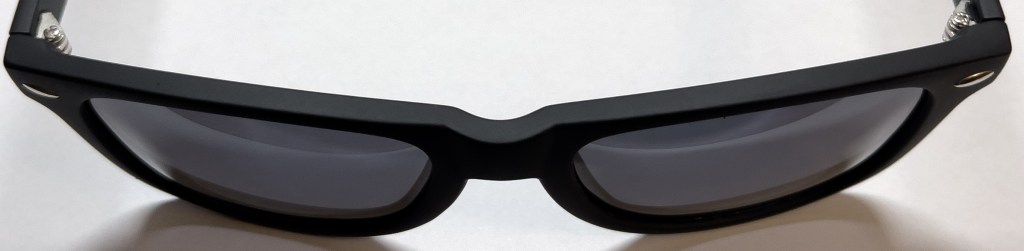
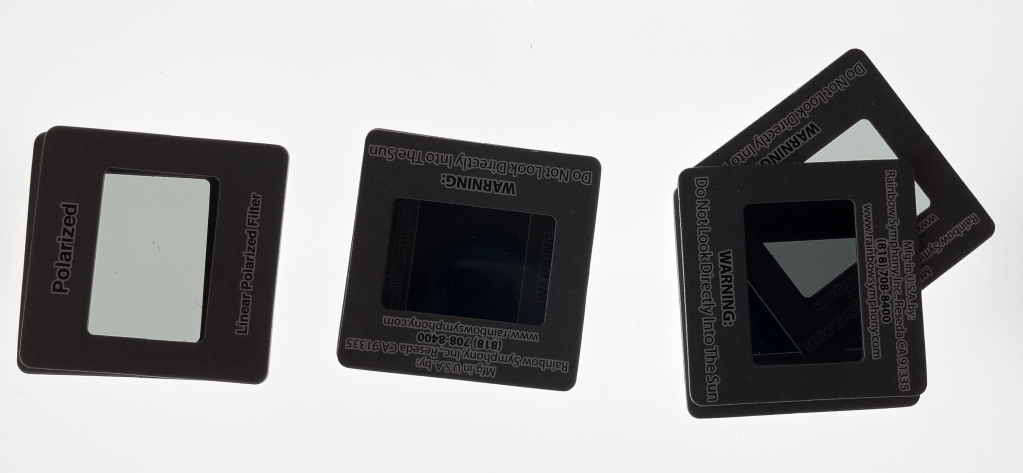
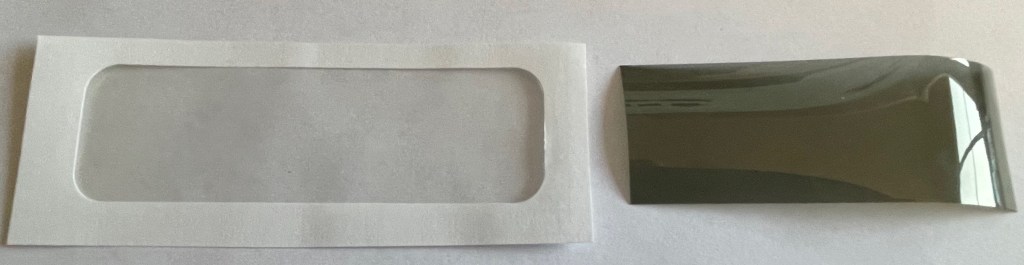
Action: Working in teams, play the role of your students, bouncing back-and-forth between observation/experimentation on the one hand and modeling/theory on the other trying to understand how linear polarizing filters work. Try lots of sandwiches with two or three layers of polarizing filters at different angles and in different orders.
For instructors only after you have completed the scene click on SPOILER ALERT.
 Just Add Math