Setting: We begin with the RGB (red, green, blue) model of color. This model is based on the human eye. Your eyes have three different color receptors — red cones, green cones and blue cones — each receptive to different colors. This model is also used in digital cameras, which have three different RGB sensors and in color displays which have three different RGB color emitters. Other colors are mixtures of red, green and blue. White and shades of gray are mixtures of equal amounts of red, green and blue.
Props: Six different gels. Light passing through three of them — the red, green and blue ones — contains only red light, green light and blue light, respectively. As part of this scene you may determine the RGB make up of light passing through the other three — cyan, magenta and yellow.
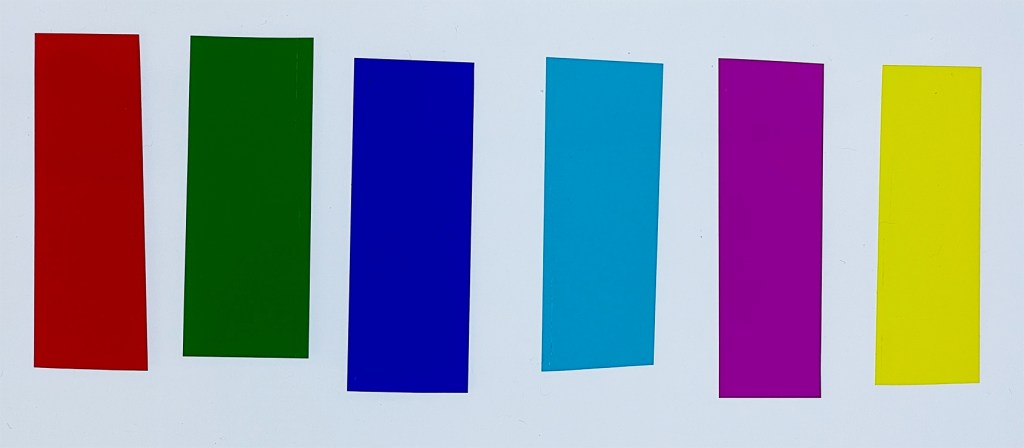
Action:
- Develop two different models of what these gels do (build a model). That is, explain what each gel does to the light entering it as it “passes through.”
- Analyze both your models and use them to make predictions about what will happen when white light passes through a sandwich of two different gels. Does it make any difference in which order the light passes through the two gels?
- Compare your two models with the real world by carrying out a series of experiments.
Bottom Line: Which of your two models is better.
For instructors only after you have completed the scene click on SPOILER ALERT.
 Just Add Math